


Introduction
Concrete grinding, masonry cutting, and surface prep create significant dust, which can damage tools and spread harmful silica into the air. A well-fitted dust shroud helps capture dust at the source, keeping your work area cleaner and your tools in better condition. Paired with a proper vacuum and technique, dust shrouds transform chaotic work into a controlled process.
This guide explains how dust shrouds work, why fitment matters, and how to choose the right shroud for different tasks. It includes application tips for edge grinding, resurfacing, tuckpointing, and indoor renovations, using HERZO shrouds as examples.
What a dust shroud actually does
A dust shroud is a guard-like enclosure that surrounds a grinder wheel or cutting disc and creates a controlled capture zone. Connected to a vacuum hose, it encourages airflow to pull fine particles away from the work surface before they plume into the breathing zone. A shroud is most effective when the brush ring (or sealing edge) maintains consistent contact with the surface and when the vacuum provides steady suction.
Grinding shrouds vs. cutting shrouds: the key design differences
Grinding shrouds are optimized for surface contact and continuous movement across flat or slightly uneven substrates. They typically use a brush ring that allows airflow while maintaining a seal, and they’re shaped to cover cup wheels while still providing working clearance.
Cutting shrouds prioritize line-of-cut visibility and depth control. Many cutting shrouds add features like a front extraction port, a roller guide, or a transparent body so you can track the kerf and keep the tool stable. Choosing the correct type matters because the airflow path, chip size, and tool dynamics differ between grinding dust and cutting debris.
Fitment and airflow: why “universal” only works within limits
“Fits all tools” is usually shorthand for “fits many common grinder patterns,” not a guarantee that one shroud will mount perfectly to every brand and model. Real compatibility depends on:
-
The grinder’s guard collar diameter.
-
How the shroud clamps or mounts.
-
The wheel size (commonly 125mm/5” or 180mm/7”).
-
Whether the shroud geometry matches your disc and working angles.
Airflow performance also depends on hose diameter, port design, and how well the brush ring seals against the surface. The most jobsite-friendly shroud is the one that mounts securely, seals consistently, and doesn’t force awkward cutting/grinding posture.
Health and compliance context: why dust control is a 2025 priority
Modern jobsites treat dust control as both a health measure and a productivity standard. Concrete and masonry dust can contain respirable crystalline silica, which is associated with serious long-term health risks. Many contractors now plan dust control into their workflow because it reduces secondary cleanup time and helps keep indoor renovation zones manageable.
Key Applications & Techniques
Flat Concrete Grinding and Surface Prep (125mm)

Flat grinding is where dust shrouds earn their keep. Whether you’re removing thinset, leveling high spots, or preparing concrete for coatings, you want steady material removal without choking the room with haze.
Start by selecting a cup wheel appropriate to the surface condition—aggressive segmented styles for heavy removal and smoother profiles for finishing passes. Keep the grinder moving in overlapping lanes, similar to mowing a lawn, and avoid staying in one spot; dwelling overheats the bond, can glaze the wheel, and often increases fine dust generation.
To maximize capture, set the shroud so the brush ring just contacts the surface without folding under. If the brush is too stiff or overly compressed, airflow can drop and suction will “stick” the tool; if it’s too loose, you’ll see dust trails. Work corners and edges by approaching at a shallow angle rather than tipping dramatically, which breaks the seal. When grinding old coatings or contaminated surfaces, expect clogs—periodically pause to let the vacuum clear the chamber and inspect the brush ring for buildup.
For this workflow, HERZO’s 125mm transparent grinding dust shroud kits are designed to make the work more controllable: the clear body helps you see the contact patch and wheel position, and the shroud form factor supports steady airflow around the cup wheel. When you’re doing surface prep in occupied spaces (retail remodels, apartment turnovers, schools), visibility and stability directly reduce rework because you can track your cut pattern while keeping dust localized.
Edge Work and Perimeter Grinding (125mm)
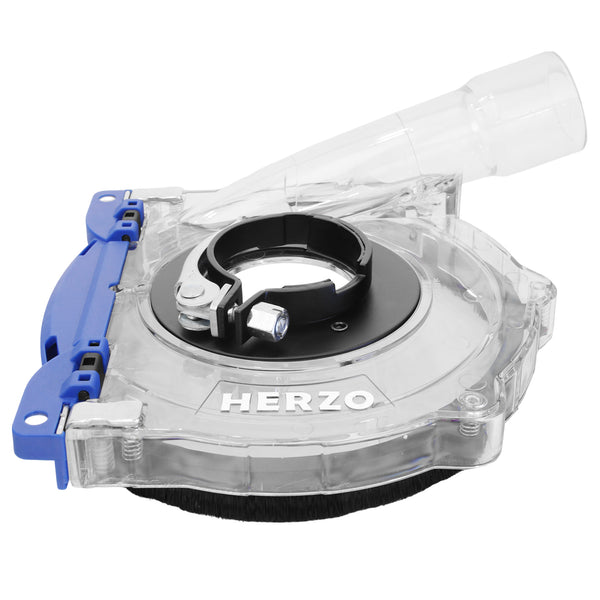
Perimeter grinding—along walls, under shelving lines, around columns, and at door thresholds—creates two common problems: seal loss and accidental gouging.
The trick is to treat the edge as a controlled “half-pass.” Instead of pushing the wheel hard into the boundary line, run parallel and let the cup wheel’s outer segment do the work while you keep the shroud skirt as close to the surface as possible. If you need to feather into a wall line, use light pressure and multiple passes; it’s faster than repairing a divot.
Dust capture at edges improves when you manage hose routing. Keep the vacuum hose over your shoulder or clipped to a belt so it doesn’t tug the shroud away from the floor. If your grinder has variable speed, consider reducing RPM slightly for finishing passes; smoother contact tends to reduce chatter and helps maintain a consistent brush seal. For rooms with HVAC returns or sensitive adjacent areas, add containment (zip walls, negative air) so any escaped dust doesn’t migrate.
HERZO’s transparent 125mm grinding shroud format is especially practical here because edge work is largely about sightlines and control. When you can see the working area through the shroud, you can keep the wheel aligned to your boundary marks and avoid the “blind” corner approach that leads to uneven grinding. Pairing a stable shroud with deliberate lane-based technique is what makes perimeter grinding look professional instead of patched.
Masonry and Concrete Cutting With Line Control (125mm)

Cutting concrete, pavers, brick, or cement board produces a different dust pattern than grinding: larger chips mixed with fine particles, a directional plume, and higher risk of kickback if the disc binds.
The safest, cleanest approach is to make progressive depth passes rather than trying to hit full depth immediately. Start with a shallow scoring pass to establish the kerf, then deepen in increments while keeping the tool stable and the shroud aligned. Let the disc do the work—forcing the cut increases heat and can warp the disc or glaze diamond segments.
For dust control, the most important variable is maintaining a consistent capture zone at the front of the cut. If the shroud blocks your view, operators tend to “peek” by angling the tool, which breaks the seal and sprays dust. A transparent cutting shroud helps you keep your line without compromising capture. Also, be realistic: long cuts in highly abrasive materials may still generate some escape, so set up the work area with airflow direction in mind—cut so the plume (if any) moves away from you and away from finished surfaces.
HERZO’s transparent cutting dust shroud format is built around this line-control reality. The clear body supports better tracking, which reduces the tendency to lift or twist the guard mid-cut. That translates into more consistent dust extraction and cleaner work when you’re cutting indoor openings, trimming backer board, or modifying masonry details during remodels.
Large-Area Grinding on Bigger Grinders (180mm/7”)

When you move up to a 180mm/7” grinder, the job profile usually changes: larger slabs, faster removal, and longer continuous run time. That raises the stakes for both tool longevity and dust management. Bigger wheels can remove material quickly, but they can also generate heavy dust loads that overwhelm small vacuums or poorly sealed shrouds.
The goal is to maintain steady airflow while keeping the tool balanced; if the grinder feels “floaty” or begins to chatter, your pressure, wheel selection, or seal is likely off.
Use a methodical workflow: map the surface, mark high spots, and grind in controlled lanes. If you’re flattening ridges or removing thick material, do rough passes first and finish with lighter, overlapping passes to reduce swirl marks. Pay attention to heat: if the shroud chamber packs with fines, extraction drops and dust starts escaping at the trailing edge. A brief pause to let the vacuum recover can be more efficient than pushing through poor suction.
HERZO’s 180mm aluminum dust shroud is aimed at heavy-duty conditions where structural reliability matters. Aluminum construction tends to handle jobsite impacts and continuous work cycles better than lightweight housings, and a stable shroud helps keep the grinder tracking straight across wide areas. This is the kind of setup that supports HERZO’s “verifiable operation” philosophy: predictable fitment, durable materials, and airflow that stays consistent over long passes.
Buying Guide: Choose the Right Grinding Dust Shroud Fast
Grinder and wheel size match
Does the shroud match 4.5–5” or 7” wheels and your grinder’s guard/collar? A mismatch compromises capture and can block wheel spin.
Visibility and control indoors
Do you need a clear housing for tight edges? Transparent covers can reduce rework at transitions and thresholds.
Fitment and compatibility
Are adapter collars included, and do they match your grinder’s neck/guard profile? A good universal kit shortens install time.
Extraction efficiency
Is the dust port aligned with your vacuum hose cuff, and does the brush‑ring sit flat? Maintain seal and airflow to prevent bypass.
Quick decision table: choosing by scenario
|
Scenario |
Main risk |
Shroud features that help most |
Technique priority |
Typical result when mismatched |
|---|---|---|---|---|
|
Flat slab grinding |
Heavy fine dust load |
Full coverage + brush seal + stable chamber |
Overlapping lanes, avoid dwelling |
Dust trails, clogging, swirl marks |
|
Perimeter/edge grinding |
Seal breaks + gouges |
Visibility + brush flexibility |
Shallow angles, light finishing passes |
“Peeking” lift-offs, uneven edges |
|
Masonry/concrete cutting |
Directional plume + binding |
Clear view + line control + front capture |
Progressive depth passes |
Dust bursts, crooked cuts |
|
Indoor renovation |
Migration to finished areas |
Front extraction + stable guide/rollers |
Containment + hose management |
Cleanup time explodes |
|
Larger grinder resurfacing |
High throughput + heat |
Durable body + consistent airflow path |
Steady lanes + pause to clear chamber |
Overheating, rapid filter loading |
FAQs
Dust shrouds and vacuums work as a system, but the shroud is what makes “at-the-source” capture possible. Without a shroud, the vacuum is trying to pull dust from the open air, which is far less efficient. A well-sealed brush ring creates a capture zone that concentrates airflow where the dust is generated. If you upgrade only one component, the shroud often delivers the most immediate improvement in visible dust control.
A good seal feels like consistent, light resistance as the shroud brushes the surface—without sticking hard or bouncing. Visually, you should see minimal dust trails behind the tool. If the grinder feels like it’s “floating,” the brush ring may be lifted by debris. If it feels glued down, airflow may be restricted by an overly tight brush or clogged filter.
Dust bursts usually happen when the sealing edge lifts or when the disc binds and the operator twists the tool, creating a gap. They can also occur when the cut is too deep for a single pass and debris overwhelms the capture zone. Progressive depth passes reduce bursts because they keep chip load manageable.
Sometimes, yes—but “one shroud” only works reliably if the mounting system matches your grinders’ guard collars and your wheel size stays consistent. If you run both 125mm and 180mm grinders, you’ll typically need different shrouds. The most reliable approach is to standardize your grinders or confirm compatibility carefully before field deployment.
Conclusion
Dust shrouds are one of the most practical upgrades you can make for cleaner grinding and cutting—especially when you match the shroud type to the task, confirm fitment, and treat airflow as a complete system with the vacuum and hose. In 2025 jobsite conditions, dust control is about more than cleanliness: it supports safer work, clearer visibility, and more predictable finishes. Use the application modules in this guide to standardize your workflow, then choose durable, well-designed shrouds—like HERZO—based on your wheel size, mounting compatibility, and the level of line control you need.


