


Introduction
Have you ever worried that the dust shroud you purchase might not be compatible with your existing tools, such as your angle grinder, vacuum, or grinding discs? Selecting a dust shroud that is highly compatible with these tools is crucial for ensuring a smooth grinding operation. If the dust shroud doesn't properly fit your angle grinder or if the vacuum's extraction port doesn't align, not only will the dust control efficiency be compromised, but work productivity can also suffer.
According to the Occupational Safety and Health Administration (OSHA), dust concentrations in concrete grinding environments can exceed safety standards by more than 10 times, and effective dust shrouds and vacuum systems can reduce dust exposure by over 90%, significantly lowering occupational health risks.
Therefore, choosing the right Grinding Dust Shroud that is compatible with your existing tools is essential. It ensures maximum dust extraction, protects the longevity of your tools, and keeps the operator safe. Whether you’re using a specific brand of angle grinder or a certain type of vacuum, finding a dust shroud that fits seamlessly with your tools can improve work efficiency and minimize cleanup time.
Top Dust Shrouds to Consider
1. HERZO 125mm Clear Grinding Dust Shroud Kit (with diamond turbo cup wheel)

If you want one setup that’s ready for common concrete prep tasks, this 125mm (5-inch) transparent grinding shroud kit is a strong “grab-and-go” choice. The clear body helps you track the grind pattern and avoid gouging, while the integrated dust capture design supports cleaner operation when paired with a suitable extractor.
-
Best for: General concrete surface grinding, coating removal, smoothing high spots, and prep work before flooring.
-
Size class: 125mm / 5” angle grinders.
-
Visibility advantage: Clear housing improves line-of-sight at the cup wheel edge, especially when feathering.
-
Dust-control approach: Designed to work under negative pressure so dust is pulled toward the vacuum port instead of escaping at the skirt.
-
Workflow fit: Ideal for pros who switch between rooms and want faster setup with fewer accessories.
-
Vacuum pairing tip: Use a vacuum with adequate airflow and a clean filter; performance drops sharply when filters cake with fine dust.
Why it wins: A transparent shroud is more than “nice to have”—it reduces rework. When you can see exactly where the wheel is cutting, you can blend overlaps, avoid low spots, and keep the grinder moving at a steady pace.
2. HERZO HCD55X Twin Blade Dust Shroud 125mm (Ø55 bayonet, roller guided)

Some jobs need more control at the contact edge—especially when you’re working near transitions, guiding along a line, or keeping the shroud stable on uneven surfaces. The HCD55X targets that “controlled movement” use case with a roller-guided layout and a bayonet-style interface sized for Ø55.
-
Best for: Guided grinding passes where stability matters (edges, lanes, and controlled removal).
-
Grinder interface: Ø55 bayonet style connection (verify your grinder collar before ordering).
-
Guidance feature: Roller-guided design can help reduce snagging and maintain a steadier stance.
-
Dust containment: Designed to keep capture close to the grind zone so fines don’t plume outward.
-
Use-case tip: Pair with a consistent, moderate feed rate; forcing the grinder increases skirt leakage and heats the surface.
-
Operator comfort: Smoother movement can reduce fatigue during long wall/floor runs.
Why it wins: A roller-guided shroud is a practical upgrade when you need repeatable, controlled passes. Instead of “fighting” the grinder to keep it level, you can focus on overlapping your pattern.
3. HERZO HCT45X Transparent Cutting Dust Shroud 125mm

When the task shifts from grinding to cutting (chasing, trimming, or making relief cuts), a cutting-focused shroud helps capture the dust stream coming off the blade path. This transparent 125mm cutting shroud keeps visibility high—useful when you’re tracking a mark line or working close to corners.
-
Best for: Dust-controlled cutting tasks with a 125mm angle grinder.
-
Visibility: Transparent body helps you keep alignment while staying behind the shroud.
-
Capture behavior: Cutting dust tends to jet outward; a dedicated shroud helps redirect it toward the vacuum port.
-
Work area fit: Good for indoor work where cleanup time and airborne dust are big concerns.
-
Safety note: Confirm blade guard compatibility and maintain proper guard positioning for the cut.
-
Vacuum tip: Use a hose diameter that won’t choke airflow; long hoses and sharp bends reduce capture.
Why it wins: Cutting creates a different dust pattern than grinding, and generic grinding shrouds often leak on plunge entries. A cutting-specific design helps keep the cloud down right where it starts.
4. HERZO HDE45X Clear Grinding Dust Shroud 125mm (4.5–5”) with brush ring extraction
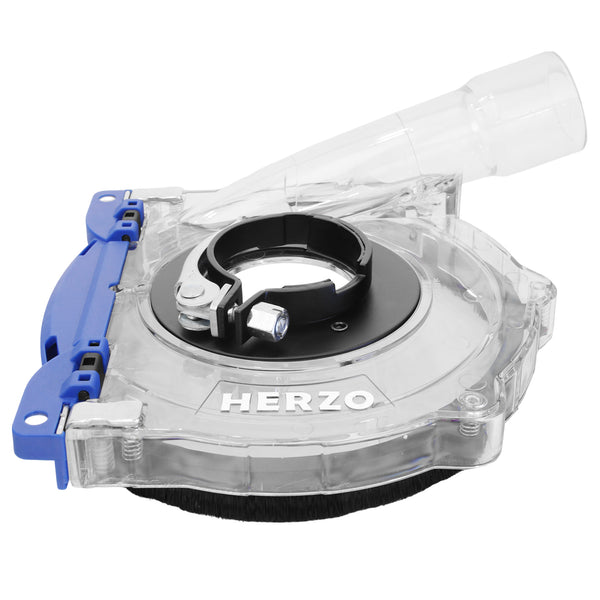
If you frequently swap between 4.5-inch and 5-inch grinders, a 125mm shroud designed around that common range can make daily setup simpler. The HDE45X emphasizes a clear housing and a brush-ring extraction approach that helps seal against minor surface irregularities.
-
Best for: Routine floor and wall grinding where you want visibility plus a brush skirt for better sealing.
-
Size compatibility: Designed around 4.5–5 inch (125mm) grinders.
-
Seal design: Brush ring helps maintain contact on textured or slightly uneven concrete.
-
Practical advantage: A better seal usually means less dust escaping during edge feathering.
-
Technique tip: Keep the brush ring clean; packed dust reduces skirt flexibility and increases leakage.
-
Maintenance tip: Periodically inspect the brush for wear—short bristles reduce capture and let fines escape.
Why it wins: For day-to-day grinding, the brush ring is often the difference between “mostly controlled” and “actually clean.” It’s a simple feature, but it supports stable negative pressure around the wheel.
5. HERZO Aluminum Dust Shroud 180mm (7”)

When you scale up to 180mm grinders, you’re usually chasing productivity—more surface coverage per pass and fewer minutes spent on big slabs. An aluminum-bodied shroud can be a good match for heavier-duty workflows where impacts, heat, and continuous use are common.
-
Best for: Larger-area grinding and higher-throughput concrete prep with 180mm / 7” grinders.
-
Body material: Aluminum construction aimed at durability in demanding conditions.
-
Coverage advantage: Larger diameter supports faster area removal when paired with the right wheel.
-
Jobsite fit: Good for contractors who routinely handle big floors, warehouse areas, or exterior slabs.
-
Vacuum pairing: Ensure your extractor can keep up with the higher material removal rate; weak airflow will show as dust trails.
-
Handling tip: Larger shrouds benefit from steady two-hand control to keep the skirt seated.
Why it wins: The 7-inch class is where dust control can fall apart if the shroud is flimsy. A more robust housing supports consistent sealing and helps the tool feel more stable during long runs.
6. HERZO 125mm Aluminum Dust Shroud Kit (with diamond turbo cup wheel)

If your crews are hard on tools—or you’re doing frequent transport between sites—an aluminum shroud kit in the 125mm class can be a pragmatic upgrade. The “kit” format also supports a more standardized setup across jobs, especially when you want fewer compatibility surprises.
-
Best for: Daily-use concrete grinding with a more impact-tolerant shroud body.
-
Size class: 125mm / 5” grinder category.
-
Durability angle: Aluminum housing helps resist cracking from knocks and drops common on busy sites.
-
Consistency: A standardized kit can reduce “mix-and-match” issues between wheels, shrouds, and vacuums.
-
Dust control: Designed for close capture at the grind zone when connected to extraction.
-
Pro workflow tip: Standardize hose adapters and keep spare brush rings/skirts in the gang box.
Why it wins: Aluminum doesn’t automatically mean “better dust control,” but it often means the shroud stays true longer—so your seal, alignment, and day-to-day reliability don’t drift after a few rough weeks.
7. BATIOPV Green Cutting Dust Shroud 5” (front extraction, roller guide)

Front extraction can be especially helpful on cuts where the dust stream projects forward along the blade path. This BATIOPV cutting shroud combines a roller guide with front-oriented extraction, aiming for better capture where the debris actually exits.
-
Best for: Line-following cuts where the dust plume tends to shoot forward.
-
Extraction position: Front extraction to intercept dust closer to the emission point.
-
Control feature: Roller guide supports smoother movement and more predictable tracking.
-
Indoor advantage: Can reduce the “hang time” cloud you often see in hallways or small rooms.
-
Technique tip: Keep the cut shallow and progressive; deep plunge cuts overload airflow and can overwhelm the shroud.
-
Vacuum pairing: A good HEPA-capable setup is recommended for fine mineral dust control.
Why it wins: Front extraction is a smart configuration for cutting because it targets the direction the dust wants to travel. That can mean less residue on the wall/floor and fewer airborne fines behind the operator.
8. HERZO Universal Surface Grinding Dust Shroud (Red)

A “universal” shroud is often chosen when you’re managing a mixed fleet of grinders or you want something flexible for varied tasks. This red HERZO surface grinding shroud is positioned as a universal option for surface grinding applications.
-
Best for: Mixed-tool environments where adaptability matters more than a single dedicated fit.
-
Primary use: Surface grinding and general dust capture during material removal.
-
Jobsite benefit: Reduces downtime when switching grinders or when a dedicated shroud isn’t available.
-
Operational tip: Test fit and check for wobble before starting—poor alignment increases leakage and can cause rubbing.
-
Work practice: Maintain steady contact and avoid lifting the shroud edge, which breaks the negative-pressure seal.
-
Trade-off to expect: Universal fit can be less “perfect” than model-specific collars, so verify compatibility carefully.
Why it wins: On sites with multiple crews and tools, the best system is often the one that gets used consistently. A universal shroud can increase compliance because it’s easier to deploy across different grinders.
How do you choose the right dust shroud?
Choosing a dust shroud is mostly about matching diameter, mounting style, and how you actually work. If you buy purely by grinder size, you can still end up with leaks, rubbing, or a shroud that blocks your intended cut angle.
Match the grinder size and the task
Grinding shrouds and cutting shrouds are not interchangeable in real job conditions. Grinding produces a broad, turbulent dust field around the cup wheel; cutting throws dust forward along the kerf. Therefore, pick a grinding shroud for surface prep and a cutting shroud for chases and trim cuts.
Confirm collar fit and mounting interface
Some shrouds are “universal,” while others call out a specific interface (for example, an Ø55 bayonet). Before you commit, check the grinder’s guard mount design and collar diameter, then compare it to the shroud’s stated compatibility. A slightly wrong fit can cause rubbing, heat buildup, and poor sealing.
Pay attention to extraction port position
Front extraction can help for cutting, while side/top extraction may suit surface grinding depending on your hose routing. The goal is the same: keep the hose from pulling the shroud off the surface while maintaining strong airflow. If the hose constantly tugs, you’ll fight leaks all day.
Brush ring vs. hard skirt: what’s better?
A brush ring is often the best all-around choice for textured slabs because it flexes over small pits and seams. However, brushes wear and need inspection; when bristles shorten, the seal weakens. If you’re grinding aggressive, rough surfaces daily, plan on periodic brush replacement as normal maintenance.
Vacuum compatibility matters as much as the shroud
Even a great shroud can’t perform if the vacuum is underpowered, the filter is clogged, or the hose is too restrictive. Use the shortest practical hose length, avoid sharp bends, and keep filters clean. For fine mineral dust, many teams prefer HEPA filtration for better containment.
Quick Comparison Table
|
Product |
Best For |
Size Class |
Visibility |
Notable Design Angle |
Trade-offs / Limitations |
|---|---|---|---|---|---|
|
HERZO 125mm Clear Kit |
General surface grinding + ready-to-run setup |
125mm |
High (clear) |
Kit format for streamlined workflow |
Kit may be unnecessary if you already standardize wheels; needs regular skirt/brush cleaning |
|
HERZO HCD55X Twin Blade |
Controlled guided grinding passes |
125mm |
Standard |
Ø55 bayonet + roller guidance |
Must verify Ø55 bayonet compatibility; roller adds parts to keep clean |
|
HERZO HCT45X Cutting |
Dust-controlled cutting and line tracking |
125mm |
High (clear) |
Cutting-oriented containment |
Can be bulkier than a standard guard; requires attention to clearance |
|
HERZO HDE45X Grinding |
Everyday grinding with improved sealing |
125mm |
High (clear) |
Brush ring extraction |
Brush wear over time; packed bristles reduce seal quality |
|
HERZO Aluminum 180mm |
Higher-throughput grinding on larger areas |
180mm |
Standard |
Aluminum body for durability |
Heavier setup; needs a vacuum that can keep up with higher removal rate |
|
HERZO 125mm Alum. Kit |
Daily-use grinding with impact tolerance |
125mm |
Standard |
Aluminum kit for consistency |
Less visual feedback than clear housings; verify compatibility across grinders |
|
BATIOPV Green Cutting |
Cutting where dust jets forward |
125mm |
Standard |
Front extraction + roller guide |
May require hose routing discipline to prevent tugging |
|
HERZO Universal (Red) |
Mixed-tool fleets and flexible deployment |
Varies |
Standard |
Universal approach |
Universal fit can be less airtight than model-specific collars; fit check is critical |
FAQ
Grinding uses a cup wheel and creates a wide dust field around the contact patch, so a grinding shroud is shaped to seal around that larger “sweep.” Cutting produces a forward-thrown dust stream along the kerf, so a cutting shroud is built to contain that jet and keep the guard functional. If you try to cut with a grinding shroud, you’ll often see leakage on plunge entry and during direction changes.
Most leaks come from broken seal contact or low airflow. First, check that the brush ring/skirt is actually contacting the surface all the way around; lifting even a few millimeters can vent a lot of fines. Next, inspect the vacuum: a clogged filter or full bag can reduce suction dramatically, and long hoses with tight bends also choke flow. Finally, make sure the shroud fits the grinder correctly—wobble or rubbing can prevent it from seating consistently.
A setup that maintains steady airflow under fine-dust load is the key—meaning clean filtration, tight hose connections, and minimal restriction. Use the shortest hose you can realistically manage and avoid stepping on or kinking it. If your work involves a lot of concrete, HEPA filtration is commonly used to limit recirculation of fine particles.
Sometimes yes, but only if the shroud explicitly supports 4.5–5 inch compatibility and the mounting interface matches your grinder. The diameter alone isn’t the whole story; collar size, guard mount style, and clearance to the wheel all matter.
Rough slabs act like sandpaper on the bristles, especially when you’re moving laterally and keeping firm downward pressure. Additionally, hot fines can pack into the bristles, making them stiffer and more prone to breaking. To extend life, keep the grinder moving and periodically clean the brush ring.
Edges and corners are the hardest places to capture dust because part of the skirt loses contact. Use a shroud that provides better control features (like roller guidance) and keep the vacuum running before the wheel touches down. Work in lighter passes and approach the edge gradually rather than tilting hard at the last moment.
Conclusion
The best dust shroud for an angle grinder isn’t the one with the most claims—it’s the one that fits your grinder correctly, matches your task (grinding vs. cutting), and keeps a stable seal while your vacuum maintains airflow. HERZO covers the most common real-world scenarios: clear shrouds for better sightlines, brush-ring designs for improved sealing on textured slabs, roller-guided options for steadier control, and aluminum bodies for more demanding daily use.
If you want the fastest path to a cleaner jobsite, pick the shroud that matches your diameter and interface first, then optimize the vacuum side (filters, hose routing, and maintenance). Dust control becomes much easier when the whole system—grinder, shroud, wheel, and extractor—works as one.


